About Maatir Maanush
Who We Are
People of the Soil. Keepers of the Stitch.
Maatir Maanush — “People of the Soil” — was born from a simple belief: that the women who make these textiles should be known by name, not just by output. That the craft they carry should be celebrated, not commodified.
We work with artisan collectives across rural West Bengal — in Murshidabad, Bolpur, and Birbhum — where the tradition of Kantha embroidery has been passed from grandmother to granddaughter for centuries.
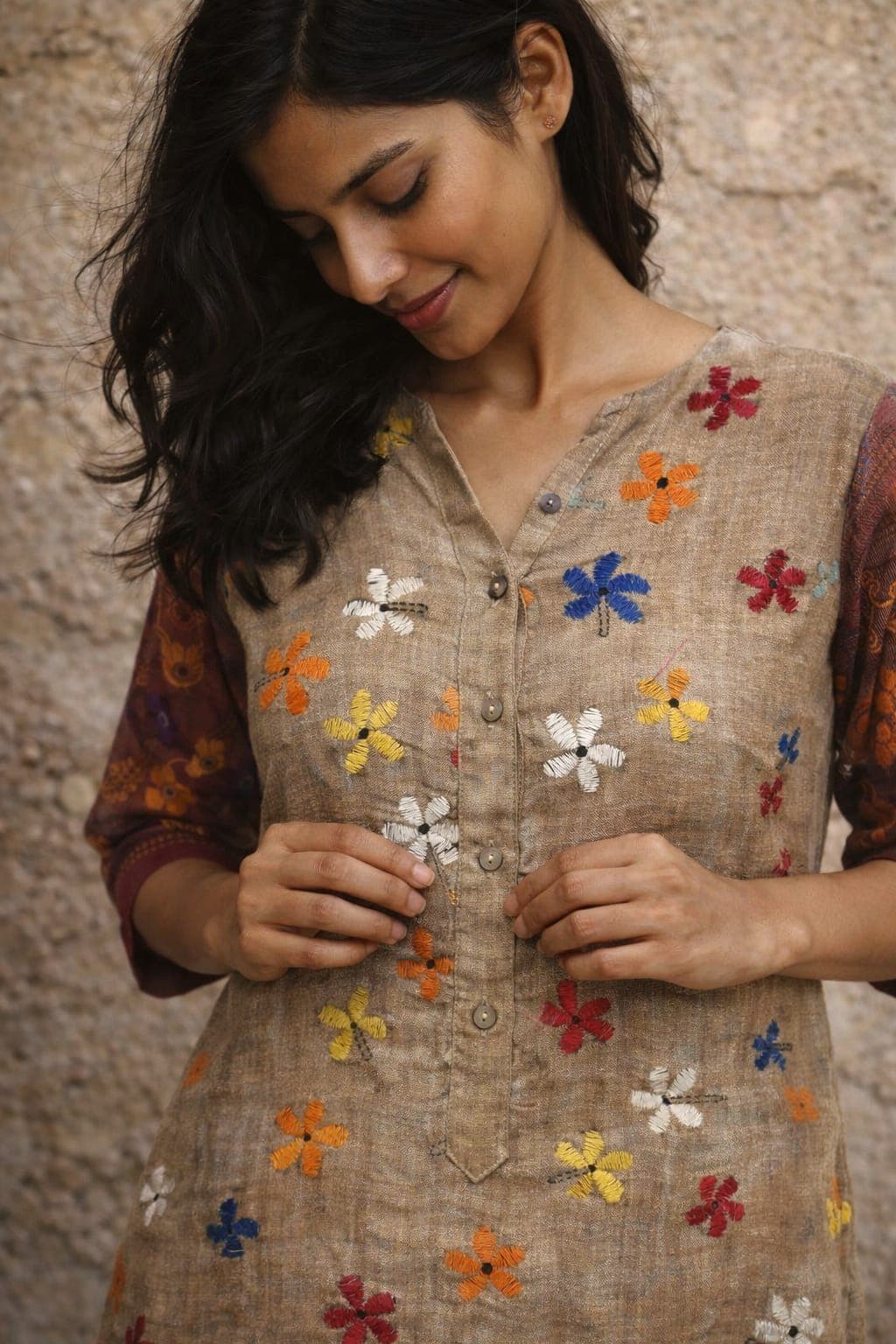
Kantha, at its origin, was an act of resourcefulness. Old sarees layered together, stitched with the simple running stitch, given new life. Waste transformed into warmth. Memory made textile.
We carry that spirit forward. Our pieces are slow to make, expensive because they should be, and built to outlast every trend. When you bring one home, you bring with you the hands that made it and the stories they carry.
The Makers
The Hands Behind the Work
We do not work with anonymous artisans. We work with people.
Shefali Devi
Murshidabad, West Bengal · 32 years of Kantha work
“My mother taught me. Her mother taught her. The stitch remembers what the tongue forgets.”
Champa Begum
Bolpur, West Bengal · 18 years of Kantha work
“I finish one saree in eight weeks. It is eight weeks of thought. Every flower I place, I think of the woman who will wear it.”
Heritage
The History of Kantha
Ancient Bengal
The Running Stitch is Born
Kantha — from the Sanskrit "kant" (rag) — emerges as a quilting tradition across Bengal. Worn sarees are layered and stitched into warm covers for the winter months.
17th–18th Century
Ritual and Ceremony
Kantha quilts become gifts of love — made by mothers for daughters, brides for grooms. Motifs evolve: the lotus, the fish, the tree of life. Each family develops its own visual language.
19th Century
Documentation & Colonial Gaze
British collectors begin to notice Kantha as "folk art". Museums acquire pieces. The craft is named, categorised, and to some extent frozen. But the women keep working.
Today
Contemporary and Alive
Kantha is now a living craft — not a museum relic. It is on silk sarees, cotton stoles, and structured jackets. The stitch is the same. The story grows longer.
Not fashion. A revolution stitched in comfort and heritage.
We don't make clothes.
We make companions.
Every garment is a second skin — pure silk, free sizes, pockets for freedom, and stitches that carry centuries-old Kantha embroidery. It is comfort without compromise, heritage without dilution, and quality without end.
Second-Skin Comfort
Pure fabrics, free sizes, no labels, no irritation.
Heritage Alive
Kantha hand embroidery keeps culture stitched into the present.
Freedom in Form
Pockets in every garment, impeccable finishing inside and out.
Quality Eternal
Superior threads, heirloom-worthy pieces, crafted to last generations.
Once a Maatir Maanush fan, always a Maatir Maanush fan.
Step into comfort. Step into culture. Step into yourself.
Wear the revolution. Live the poetry. →Find your piece.
Every piece is one-of-a-kind. Once it finds its person, it is gone. Reach out and we will help you find yours.
Enquire